Soziokratie in der politischen Studentenbewegung Serbiens
 Vladan Lausevic lebt, mit Wurzeln in Bosnien und Serbien, seit 2003 in Schweden, wo er mit der Schwedischen Soziokratie-Community verbunden ist. Er beschäftigt sich intensiv mit der Serbischen Demokratie-Bewegung und hat Parallelen zur Soziokratie darin entdeckt.
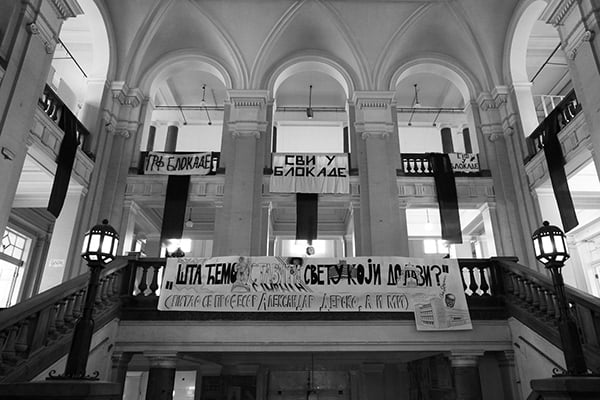
Was passiert, wenn eine Protestbewegung bewusst auf feste Anführer verzichtet? In Serbien organisieren Studierende ihre Blockaden und viele ihrer wichtigsten Entscheidungen in sogenannten Plena. Diese offenen Versammlungen an Fakultäten verbinden direkte Demokratie, Rotation und kollektive Verantwortung. Sie sind keine Soziokratie im engeren Sinn – zeigen aber überraschende Parallelen zu ihr und helfen zu erklären, warum die Studentenbewegung so widerstandsfähig geworden ist.
Mehr auf Englisch:
Serbia and Student Plenums – Direct Democracy from the Lecture Hall
Since the student protests in Serbia began, one word has become central to understanding how the student led protest movement works: plenum.
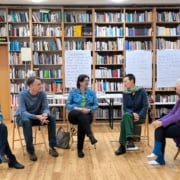
A plenum can be described as an open decision-making assembly at a university faculty. Students can participate, speak and vote. Instead of electing a permanent leadership as a board, plenums use temporary roles such as moderators, delegates and note-takers. Moderators and delegates rotate, while decisions are generally taken by majority vote.
A typical plenum process is much more than a typical meeting procedure. The plenum is designed to share and distribute power, action and responsibility. In practice, no single student can claim to speak for everyone. Delegates coordinating between faculties carry decisions made by their own plenums rather than receiving a mandate top-down.
Plenums also create working groups to implement collectively adopted decisions into practical action as during the protests against the regime since 2024. Practices developed inside lecture halls such as listening, rotating, voting and also respect for disagreement are carried into demonstrations and wider electoral coordination. This is the case as Serbia is having general elections on October 25th.
The model also reflects lessons from Serbia’s student protests against the authoritarian regime of Slobodan Milošević in the 1990s. Today’s plenums are not simply a copy of the past. Instead, students have done a strategic lesson from that period where for example, visible leaders and representatives can become separated from a movement, pressured or “bought” by the government/regime.
The current system therefore goes further in preventing permanent leadership and centralised authority. The process of plenum can be slow and demanding, but it is also very inclusive, more engaging and participatory, and also difficult to control from outside. Plenums thereby prevent the authoritarian regime in Serbia from dismantling and obstructing the civic protest movement for democracy, justice and fairness.
There are several parallels and similarities between the student plenums and sociocracy. It is for example about distributed authority, decentralized decision-making, open dialogue, inclusive participation, shared responsibility, rotating roles and collective ownership of decisions. At the same time, there is an important difference because student plenums generally decide by consensus or qualified majority vote. While consent is often done in practice, it is not the main practice and procedure. Still, plenums in Serbia are an important part of the democratic renewal and experiment at the moment, in a country with a modern history of authoritarian and undemocratic systems.
Would you like to keep reading about new forms of democracy through student-led protests in Serbia? Join my monthly newsletter to follow and get an update every month. You can start with a one-time donation or contribute €2 monthly for research and writing.
Subscribe to my newsletter here: https://buymeacoffee.com/vladlau and click “supporter” or “member”. Both will receive my monthly newsletter.
Text by Vladan Lausevic